

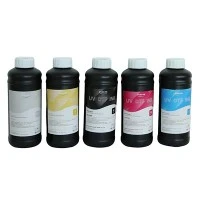


How many categories are there for flag textile inks based on ink concentration? How to use textile ink?
I. Flag textile inks are divided into two main categories:
1. Sublimation flag ink:
Dye-sublimation flag ink(mainstream for synthetic fiber flags, street flags, and water-base flags) come in 3 standard concentration levels, plus a special fluorescent ink:
(1). Standard Concentration Sublimation ink
Pigment solid content 8%–10%, ink is thin with good fluidity, and does not clog printheads easily.
Applications: Indoor short-term colorful flags, thin flag fabrics, 4/6 PASS slow printing; soft image, easily fades outdoors.
(2). High Concentration Sublimation ink (General market type)
Solid content 12%–15%, high saturation, ink-saving, double-sided flags have uniform colors on both sides, the preferred choice for mass production in stores.
Applications: Regular outdoor flags, warp-knitted fabrics, 3 PASS high-speed printing.
(3). Ultra-High Concentration Sublimation ink (Sun-resistant extra thick)
Solid content 16%–20%, strong coverage, UV-resistant, does not turn white after long-term outdoor exposure.
Applications: Full-coverage dark images, thickened blackout flags, 2 PASS high-speed machines; use with caution on old printheads, prone to clogging.
(4). Special: Fluorescent High-Concentration Sublimation Ink
Concentration is much higher than ordinary ink, used only for warning fluorescent colors, cannot be used alone in large quantities.
2. Water-based direct-to-fabric ink:
Water-based direct spray textile ink (pure cotton, poly-cotton, knitted fabric flags),Divided into 4 categories: standard color ink, high- color ink, standard white ink, high-concentration priming white ink; dark fabrics must be paired with high-concentration priming white ink.
II. General Usage Method of Textile Flag Ink
(I) Pre-refilling Operations
1. Shake well: Let the ink stand for more than 1 day, then shake up and down for 3–5 minutes to prevent pigment sedimentation from causing color difference or ink starvation.
2. Filter: Filter new ink with a 0.2μm filter before refilling to remove impurities and protect the printhead.
3. Bleed air: After refilling, bleed the ink to remove air from the ink cartridge and lines to avoid printing white lines or ink starvation.
4. Strictly prohibit mixing: Inks of different concentrations or brands must not be mixed; when changing concentrations, the entire ink path must be thoroughly cleaned.
(II) Print Parameter Matching (Adjusted by Concentration)
1. Standard Concentration Ink
Ink load 100%–115%, 4–6 PASS printing, drying 80–100℃, suitable for light colors and gradient images.
2. High Concentration Ink (Most Commonly Used)
Ink load 80%–95%, 3 PASS mass production, drying 90–110℃, best for double-sided translucent flags.
3. Ultra-High Concentration Ink
Ink load 70%–85%, 2–3 PASS, drying 100–120℃; do not increase ink load, otherwise the fabric will bleed ink and become sticky.
(III) Two types of process color fixing steps
Process 1: Dye sublimation transfer printing (transfer paper heat press)
Printed on transfer paper, then transferred to synthetic fiber flag fabric
Temperature 180–200℃, moderate pressure, time 40–60 seconds; high concentration / ultra-high concentration ink shortens transfer time to prevent color bleeding.
Process 2: Direct printing on flag fabric (self-coated, no transfer required)
After printing, the machine dries it completely to form the product, no heat transfer needed.
Process 3: Water-based cotton textile ink (pure cotton flags)
After printing, dry at high temperature 140–160℃ for 1–3 minutes to fix color, washing fastness meets standards; for dark fabrics, spray a layer of high concentration white ink as a base before printing colors.
(IV) Daily Maintenance and Storage
1. Environment: Store at room temperature (5–30°C) away from light; use within 3 months after opening; prolonged storage leads to decreased concentration and lighter color.
2. Shutdown Maintenance: For ultra-high concentration ink, if the machine is shut down for more than 3 days, draw ink daily to keep it moist to prevent pigment crystallization and nozzle clogging.
3. Printhead Compatibility: DX5/DX7 old printheads prioritize standard/high concentration; i3200 and 5113 new printheads are compatible with all concentrations.