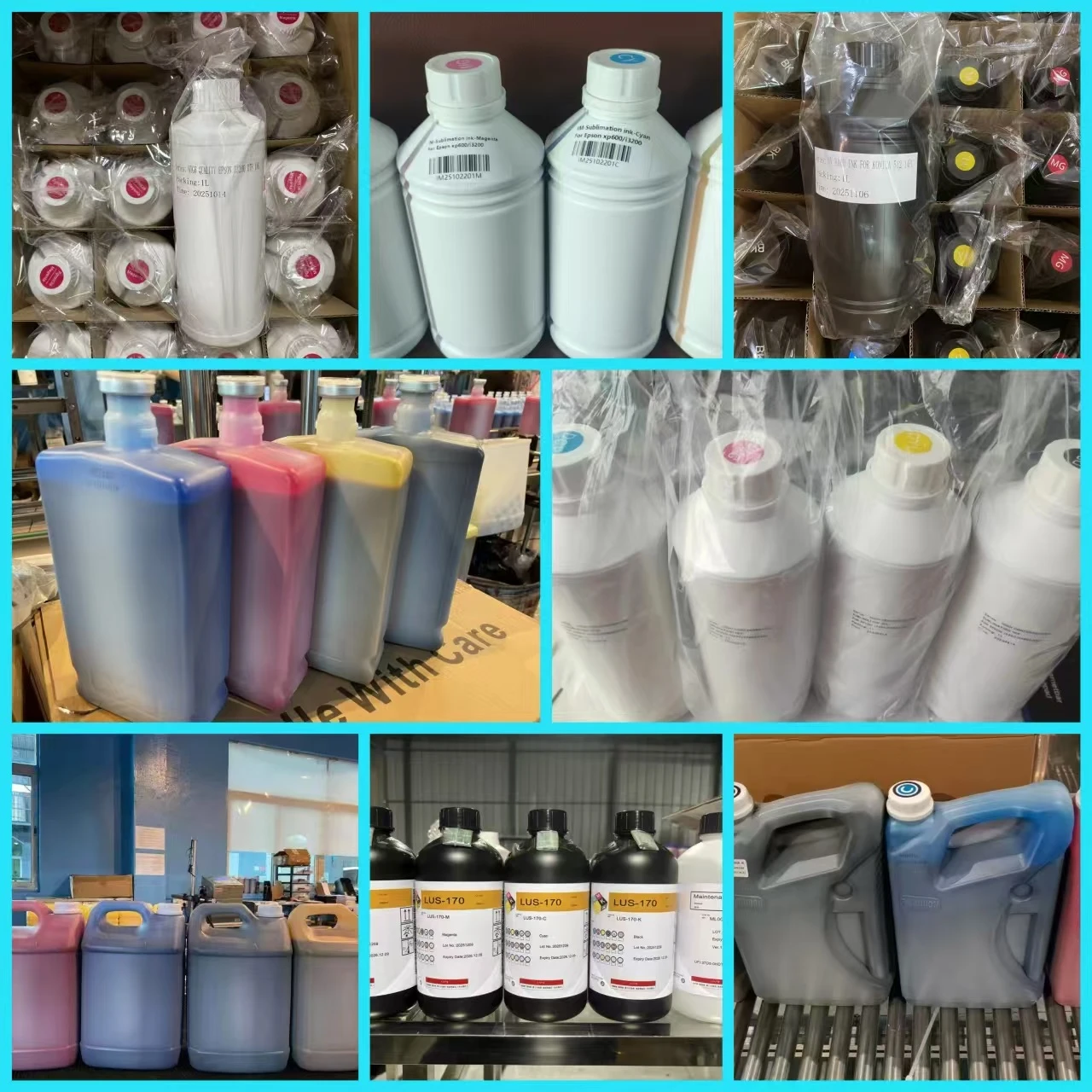
Key points for selecting UV LED ink
I. First lock down the core parameters (Top priority)
1. Match the curing wavelength
- Mainstream: 395nm (Universal), 405nm (White base/Thick ink layer)
- Niche: 365nm (Specialty glass/Films)
The wavelength of the machine's LED must match the ink; otherwise, it will not dry, become sticky, or fade.
2. Printhead model compatibility (Directly determines the probability of clogging)
- Epson XP600/TX800: Low viscosity, fine pigment, low corrosivity
- Ricoh G5/G6, Konica: Medium viscosity, high settling stability, resistant to long-term circulation
- Toshiba, Kyocera industrial heads: High fluidity, low impurities, higher filtration precision
Inks for different printheads cannot be mixed; mixing will cause clogging and corrosion of the sealing rings.
3. Viscosity & Fluidity
- Digital inkjet: 25–45 cps is optimal at room temperature
- Viscosity too high: Ink breakage, misting
- Viscosity too low: Ink dripping, ink piling, blurry patterns.
II. Select Ink by Material (Ensure Adhesion)
1. Universal Uv Ink
Acrylic, Wooden Board, Particle Board, Cardstock, PVC, Foam Board
2. Hard Uv Ink
Glass, Tiles, Metal, Aluminum Plate, ABS Hard Materials
Features: High hardness, scratch-resistant, wear-resistant; prone to cracking when bent
3. Soft Uv Ink
Leather, Light Box Cloth, Knife-cut Cloth, Soft Film, PP/PE Soft Plastics
Features: Stretchable, does not crack when folded, ink layer remains intact
4. Enhanced Adhesion Uv Ink
Difficult-to-bond materials: PE, PP, Coated Boards, Coated Panels
Requires: Primer treatment liquid; otherwise, ink is prone to peeling.
III. Key Performance Indicators (Must-read for Factory Production)
1. Curing Speed
LED lights cure instantly, suitable for high-speed printing, with no ghosting or sticking.
2. Weather Resistance Rating
- Indoor: Standard scratch resistance, alcohol resistant
- Outdoor: Sun and UV resistant, waterproof, fade-resistant for 2–5 years outdoors
3. Corrosion Resistance
High-quality ink: Does not corrode nozzles, tubes, or ink cartridges; stable for long-term use.
Low-quality ink: Corrodes gaskets, causes crystallization and nozzle clogging, and frequent ink starvation.
4. Odor & Environmental Friendliness
LED UV: Low odor, low VOC, ozone-free; allows for enclosed workshop production.
Select low-migration eco-grade for food and children's products.
IV. Key Points to Avoid Pitfalls (Save Money)
1. Do not judge by price alone
Cheap ink: High pigment impurities, prone to sedimentation, clogs nozzles quickly, poor adhesion, extremely high maintenance costs
2. Color Difference Issues
Choose high-concentration ink: Wide color gamut, high saturation, no graying, no color shift
3. Storage Stability
Store at room temperature away from light; resistant to stratification, sedimentation, and skinning; long usable period after opening
4. Sedimentation & Filtration
Ink filtration precision ≥0.2μm; reduces nozzle micro-clogging; suitable for 24-hour continuous production
V. Daily Usage Recommendations
1. Matching Usage: Use the same brand of ink and cleaning solution for optimal compatibility
2. Daily Maintenance: Clean nozzles before shutdown every day; regularly purge ink to remove sediment
3. Environment: Workshop temperature 18–28℃, humidity 40%–60% for the most stable printing performance
VI. Quick Selection Minimalist Slogan
Check wavelength → Match printhead → Distinguish soft/hard → Identify material → Select outdoor/indoor → Prioritize stable models from major brands.