

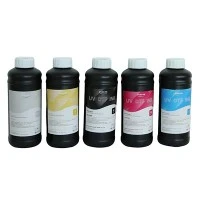


What is the difference between dye sublimation ink and DTF pigment ink?
Dye Sublimation Ink (sublimation ink) and DTF Pigment Ink (direct to film ink) are two different kinds of digital printing ink, and the core difference lies in the working principle, application scenarios, consumable requirements and performance. Here is a detailed comparison:
1.Core working principle:
|
Property |
Dye Sublimation Ink |
DTF Pigment Ink |
|
Principle |
The ink is vaporized into gas by high temperature (usually 180-200°C), permeating into the interior of the fibers the substrate and curing the colorant. |
Ink is printed directly on the transfer film, and the pattern is transferred to the surface of the substrate by low-temperature hot pressing (about 13-160°C), forming a layer of attached film. |
|
state change |
Liquid → Gas → Solid (molecular level penetration) |
Liquid → solid (physical attachment, film coverage) |
2.Application scenarios and substrates:
1). Dye Sublimation Ink:
Suitable materials: Polyester fibers (such as sportswear flags), coated ceramics (mugs), metal plates, acrylic, etc. Materials containing polyester components
Reason: Non-ester materials cannot adsorb sublimated dye molecules, and the patterns are prone to falling off.
Typical applications: Digital textile printing (sportswear, swimwear), gifts (mugs, phone cases), advertising spray painting (flags, light box cloth).
2). DTF Pigment Ink:
Itable materials: Natural fibers such as cotton, linen, silk, wool, and non-textile materials such as leather, plastic, wood, etc.
Advantages: No for pretreatment of the substrate, wider compatibility, especially suitable for dark fabrics (need to be underlaid with white ink).
Typical applications: Clothing printing such T-shirts, hoodies, canvas bags, shoes, etc., as well as decoration of hard surfaces (such as furniture, toys).
3.Consumables and equipment requirements:
|
Project |
Dye Sublimation Ink |
DTF Pigment Ink |
|
Printer type |
Dedicated thermal sublimation printers (such as Mutoh Valuejet series), which require piezoelectric inkjet heads (such as DX/DX7/I3200) to be matched. |
DTF dedicated printer (with inkjet printhead + drying module), additional transfer film, hot melt powder and heat press machine required. |
|
Accessories |
Sublimation transfer paper (temporary pattern); high-temperature heat press machine. |
DTF transfer film (PET material), hot melt powderattachment medium), low-temperature press machine. |
|
Ink color |
Typically CMYK four colors, partially supports light colors (such as light magenta, light cyan) to enhance the gradient effect. |
It is necessary to use CMYK white ink (white is used as a base color for dark fabrics to enhance the brightness of the pattern). |
4.Performance contrast:
|
Performance |
Dye Sublimation Ink |
DTF Pigment Ink |
|
Color representation |
Vibrant color, high saturation, natural gradient transition, suitable for high-precision patterns of photographic level. |
Slightly lower color saturation, but white ink can enhance contrast, and it performs better on dark fabrics. |
|
Durability |
Withstands numerous washes (over 50 times on polyester fabric), but prolonged exposure to sunlight can cause fading. |
Moder washability (about 20-30 times on cotton fabric), the pattern's surface film layer may peel off due to friction, and vigorous scrubbing should be. |
|
Touch |
no film feel, pattern and fabric are integrated, good breathability (suitable for close-fitting clothing). |
There a slight film feel (depending on the thickness of the rubber powder), poor breathability, and heavy fabrics (such as sweatshirts) are less affected. |
|
Environmental protection |
The dye ink does not contain VOCs, but the high-temperature sublimation process may release a small amount of gas, which requires. |
The pigment ink contains resin components, and some of the binder powder may contain irritating substances, so ventilation should be noted. |
5. Cost and Efficiency:
1)Dye Sublimation Ink:
Higher equipment and ink costs (specialized printers coated substrates), but printing speed per piece, suitable for mass production.
2)DTF Pigment Ink:
Low equipment entry cost (can modify regular inkjet printers), but transfer and powder glue increase consumable costs, and longer processing time per piece (needs drying, powdering, and pressing).
6. Summary: How to choose?
|
Demand scenario |
recommended ink type |
key reasons |
|
Polyester fabric, high color saturation, breathable requirements. |
Dye sublimation ink |
Molecular level penetration, suitable for sportswear, digital printing. |
|
Natural fibers (cotton, linen), dark-colored fabrics. |
DTF pigment ink |
no coating required, compatible with non-textile materials film layer coverage for deep color display. |
|
Small batch personalized customization (cost sensitive) . |
DTF Pigment Ink |
Low equipment modification cost, no need for special fabric. |
|
Large-scale industrial production (such as flags, swimwear). |
Dye Sublimation Ink |
High-speed printing high durability, suitable for large-scale. |
Through the above comparison, you can choose the appropriate ink technology according to the material of the substrate, color requirements, cost budget and production scale. If you to know more specific product parameters (such as ink viscosity, concentration), you can contact our foreign trade sales staff.