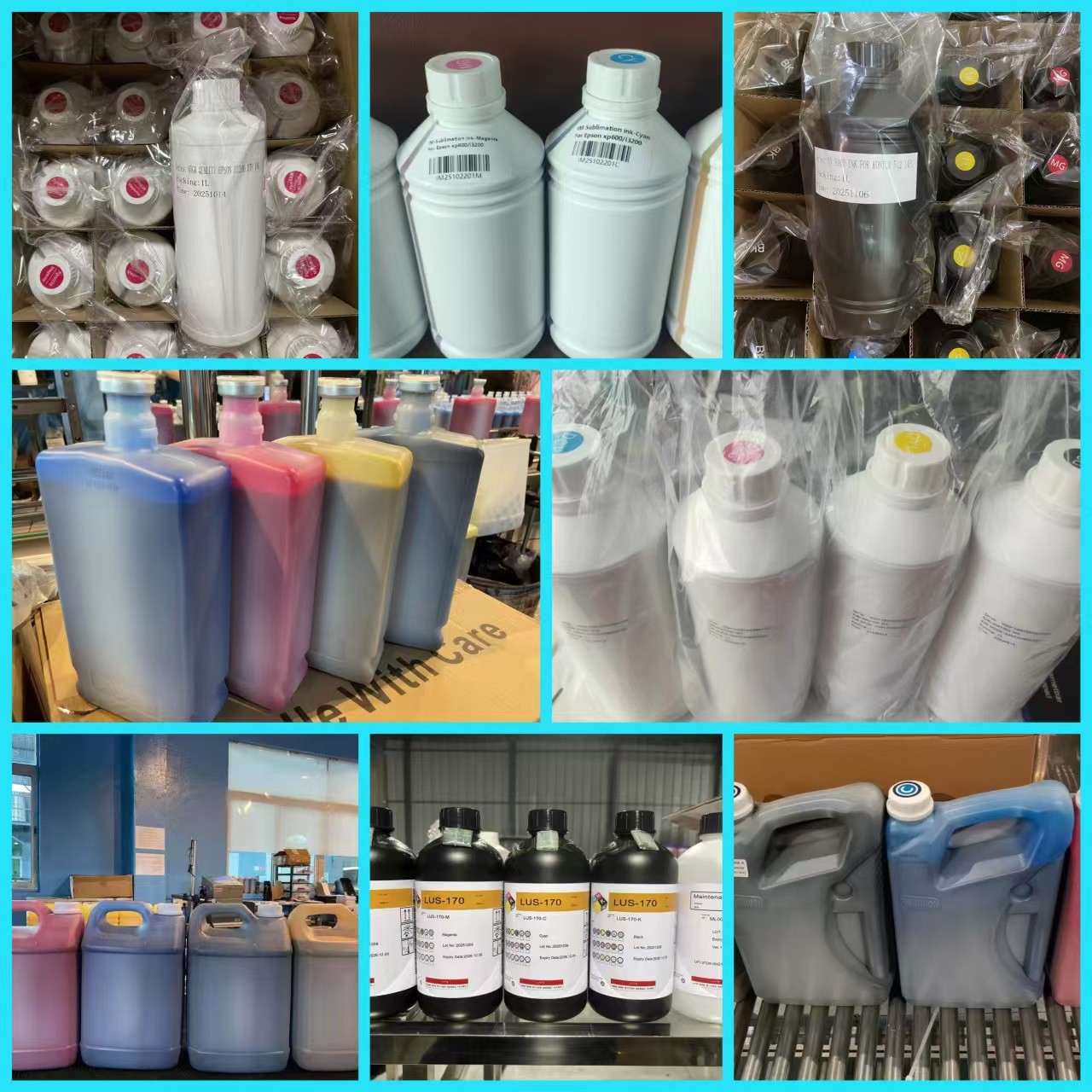


UV Ink Buying Guide: Complete Strategy for Printhead Matching Material Adaptation
The core of purchasing UV ink lies in precise printhead matching and high material adaptation, both of which directly determine printing effects, printhead lifespan, and production stability. This article provides a directly implementable selection scheme from four aspects: printhead models, material types, performance indicators, and buying pitfalls to avoid.
I. Step One: Select Ink by Printhead Model (Absolutely Must Be Correct)
The printhead is the core of the UV printer. The ink's viscosity, surface tension, and droplet compatibility must strictly correspond to the printhead model. Matching the brand alone is not enough; it must be precise to the specific model.
Mainstream Printhead Ink Matching Standards
Epson Printheads (High-precision consumer / commercial)
Applicable models: i3200-U1, XP600, F1080, DX5/DX7
Ink requirements: Low viscosity (7–12cP), ultra-fine droplets (3.5–12pl), extremely high flowability
Applicable scenarios: Soft films, transfer films, leather, fine graphics, UV DTF. High-viscosity industrial inks are prohibited, as they easily cause printhead clogging and ink dropouts.
Ricoh Printheads (Industrial-grade high-speed / high-relief)
Applicable models: Gen5, Gen5i, Gen6
Ink requirements: Moderate viscosity (8–15cP), grayscale compatibility, excellent weather resistance
Applicable scenarios: Universal for soft and hard materials, board printing, relief processes, high-requirement materials such as metal / glass.
Konica Printheads (Large-format industrial inkjet)
Applicable models: 512i, 1024i (7pl/13pl/30pl)
Ink requirements: Relatively high viscosity (12–20cP), large droplet compatibility, fast curing speed
Applicable scenarios: Light box fabric, PVC boards, outdoor advertising, large-format rigid boards.
Seiko / Toshiba / Xaar Printheads (Specialized industrial models)
Seiko 1536, Toshiba CF3: Compatible with medium-to-high viscosity inks, focusing on high-relief and thick ink layer printing
Xaar: Compatible with specially formulated inks, focusing on environmental friendliness and low odor
3 Iron Rules for Printhead Matching
Only buy ink labeled with the corresponding printhead model; do not buy products with vague "universal" labels;
Verify that the viscosity, surface tension, and curing wavelength (mainstream 395nm/405nm) are consistent with the printhead parameters;
The ink supply system must be cleaned before the first replacement; mixing inks from different brands is strictly prohibited.
II. Step 2: Select ink type based on printing material (no cracking, no peeling, wear-resistant)
UV inks are divided into three categories based on hardness and flexibility: hard, soft, and medium. The material determines the ink type; choosing the wrong one will lead to cracking, peeling, and scratching.
1. Hard UV Ink (Exclusively for rigid materials)
Core characteristics: High hardness after curing, scratch and wear-resistant, strong adhesion, no stretchability
Applicable materials: Glass, tiles, ceramics, metal (aluminum / stainless steel), acrylic, wood boards, hard ABS, stone
Typical scenarios: Signs and signage, handicrafts, home decoration panels, outdoor rigid advertising
Contraindications: Flexible / bendable materials, will crack upon bending
2. Soft UV Ink (Exclusively for flexible / bendable materials)
Core characteristics: High elasticity, stretchable, does not crack when bent, adhesion adapted to soft surfaces
Applicable materials: Soft PVC film, lightbox fabric, leather / PU, TPU, soft silicone, bendable plastics, wallpaper
Typical scenarios: Soft film ceilings, leather products, packaging rolls, car stickers
Contraindications: Purely rigid high-gloss materials, prone to peeling
3. Medium UV Ink (Universal balanced type)
Core characteristics: Balanced hardness and flexibility, does not crack with slight bending, also wear-resistant
Applicable materials: Ordinary PVC boards, KT boards, small to medium acrylic, phone cases, regular plastics
Typical scenarios: Quick graphic printing, multi-material mixed printing, mass universal production
Special material selection supplements
Transparent / dark materials: Must select high-opacity white ink, paired with colored ink, to avoid transparency
Food contact / children's products: Select low-odor, RoHS/REACH certified eco-friendly inks
Long-term outdoor use: Select anti-yellowing, UV-resistant specialized inks to prevent fading and cracking.
III. Step 3: Must-Watch Core Performance Indicators (Key to Avoiding Pitfalls)
Adhesion: No peeling in cross-hatch test, no scratches in alcohol/eraser test
Curing Speed: Matches equipment lamp power, non-tacky, no ink piling, no edge curling
Color Stability: Small batch color difference, wide color gamut, outdoor sun resistance without fading
Environmental Friendliness: Low VOC, no pungent odor, with SGS and RoHS test reports
Maintainability: Not prone to nozzle clogging, easy to clean, no sedimentation or layering during long-term static storage
IV. Quick Purchase Summary (Directly Copy and Use)
First, determine the printhead model → Lock in ink viscosity and compatible formula
Then, determine the main printing material → Choose hard / soft / neutral ink
Verify curing wavelength, environmental certifications, and batch stability
Test small samples first: Only proceed to bulk purchase after passing printing, bending, scratching, and weather resistance tests
Following the above rules can both guarantee printing effects and protect the printhead, reduce failure rates, and achieve stable and efficient production.